What does "open-source hardware" actually mean for a scientific instrument?
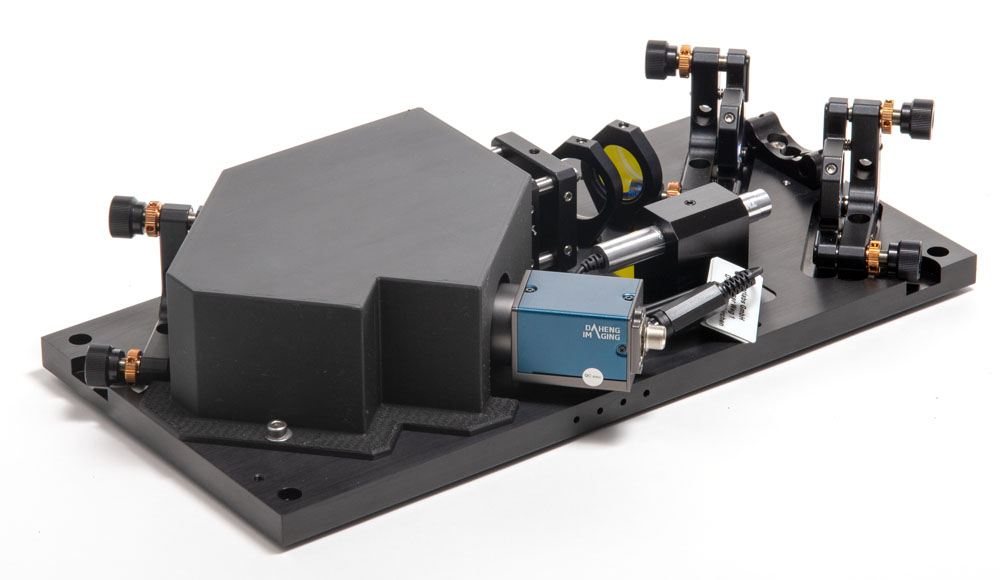
Open-source hardware means that the design files, documentation, and whenever applicable the software used to build and operate the instrument are openly available. Unlike proprietary systems, you are free to inspect how the instrument works, reproduce it, modify it to suit your needs, or simply purchase a professionally assembled version from us. You always retain full control over the technology you are using.
Do I need to assemble the instrument myself, or can I buy it ready to use?
Not at all. Every instrument can be purchased fully assembled, tested, calibrated when applicable, and ready for immediate use. If you enjoy building your own equipment or wish to use the instrument as an educational project, all the necessary documentation is available so that you can reproduce or reassemble it yourself.
How do your instruments compare to commercial systems in terms of performance and accuracy?
Our goal is not to compete with every premium commercial instrument on the market, but to provide reliable scientific tools that offer satisfactory performance for research and teaching at a fraction of the cost. We carefully design, validate and characterize every instrument to ensure that it delivers meaningful, reproducible measurements while remaining transparent and fully maintainable.
Are your instruments suitable for research, teaching, or both?
Both. Our instruments are used by research laboratories that value transparency and long-term maintainability, as well as by universities looking for affordable teaching equipment. Because students can access the complete design and even reassemble the instruments themselves, they become powerful educational tools in addition to being scientific instruments.
Do you provide calibration certificates and CE-compliant products?
Yes. All products we manufacture comply with applicable CE regulations. Whenever relevant, instruments are delivered with an individual calibration report, allowing you to confidently integrate them into your laboratory or teaching environment.
Can I modify the hardware or software without voiding support?
Absolutely. One of the key advantages of open-source hardware is the freedom to adapt the system to your own research. You are welcome to modify the hardware, firmware or software according to your needs. While we naturally cannot guarantee the performance of modified systems, we are always happy to discuss your changes and provide guidance whenever possible.
What documentation, source files, and software are included with the instrument?
We strive to provide complete documentation for every project, including assembly instructions, maintenance procedures, bills of materials, design files, and software when applicable. Our objective is to ensure that you can understand, maintain and reproduce the instrument independently without relying exclusively on us.
What kind of technical support, warranty, and spare parts do you provide?
We stand behind every instrument we manufacture and provide technical support to help you get the most out of it. Because our designs are open, spare parts are easy to source and the documentation remains available over time, reducing the risk of your instrument becoming obsolete due to unavailable proprietary components. And if you still struggle with your instrument, we also offer extra paid support with video calls.
Can I customize an existing instrument or request a completely new design?
Yes. Although we offer a catalog of ready-to-use instruments, we regularly collaborate with researchers, universities and industrial partners to adapt existing designs or develop entirely new systems. If your application requires specific features, we would be happy to discuss your project.
Why should I choose an open-source instrument instead of a traditional commercial solution?
Open-source instruments offer transparency, flexibility and long-term independence. Instead of relying on proprietary hardware, closed software and vendor-specific maintenance, you gain complete visibility into how your instrument operates and the freedom to maintain, upgrade and adapt it over time. Combined with professional assembly, quality control and documentation, this approach provides a sustainable and cost-effective alternative to conventional laboratory equipment.
Can you design a custom optical instrument for our application?
Yes. We develop custom optical instruments tailored to specific scientific and industrial applications, from initial feasibility studies to fully functional prototypes. Whether you need a new measurement principle, an automated optical bench or a complete instrument, we work closely with you to transform your requirements into a practical and reliable solution.
What kind of technical expertise do you have?
We support projects across a broad range of optical technologies, including spectroscopy, interferometry, deflectometry and image processing including GPGPU programming. Our experience focuses mainly on R&D and prototypes development, with a proven project methodology structure.
How do you approach a new development project?
We believe that successful projects are built through rapid iterations rather than lengthy specification phases. Our development process emphasizes early proof-of-concepts, frequent customer feedback and progressive risk reduction. We will be happy to train your lab acquire the skills required for successful optical instrument development.
Cookies Policy
At ZZZ-OPTICS, we are 100% compatible with the EU Cookies Policy law. And if we don't ask your permission to store cookie, it's because we do not use them! Cookies are unecessary for the operation of our website and so we don't use them.

 Because you can access the sources, you have full control on what the instrument is doing and you don’t suffer from black boxes effects